Native American Netroots
Menu
Border


Make a New Account

Username:

Password:


Forget your username or password?


Search


Advanced Search


Active Users
Currently 0 user(s) logged on.

Native American Netroots


...A Forum for American Indian Issues...

Native American Netroots

American Indians as Slaves

by: Ojibwa

Wed Jan 06, 2010 at 16:15:52 PM PST


( - promoted by navajo)

When the subject of slavery in the Americas is discussed, many people assume that this is about the 13 million Africans who were captured, enslaved and transported to the Americas to work on the plantations. Yet the history of slavery in the Americas starts long before this. From the very beginning of the European discovery of the American continents, Europeans were involved with slavery: not African slaves, but American Indians.  
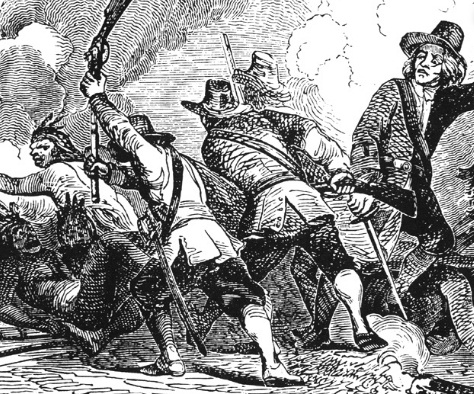
Ojibwa :: American Indians as Slaves
First, some background: social scientists often describe three forms of slavery: (1) chattel slavery, (2) debt slavery, and (3) contract slavery. What I am about to describe is chattel slavery. In this type of slavery, a person is captured, and then sold into permanent servitude. In this type of slavery the legal term "own" applies.  In chattel slavery, "persons" are synonymous with "property". As chattel, slaves have no rights and are not paid for their labor. They also have no control over their bodies and may be required to provide sexual services.

Europeans came to the Americas looking for wealth. Initially, they were not really trying to establish colonies for their surplus population, but to extract wealth from the resources which they found. In addition to gold and silver, the Europeans found wealth in the slave trade. The slave trade by the 15th century was well established in Europe.

By the year 675 there was a well-established trade in slaves in Europe with the Frisians occupying the major role as slave merchants. About 750 the slave trade expanded. It was driven in part by the Islamic world, centered in Cairo, Damascus, Tunis, and Cordoba. The Muslims had a great need for labor and thus there was a ready market for slaves. Some of these slaves came from Africa and some of them from Europe. The Vikings soon became the major suppliers of slaves and Viking wealth was built upon the slave trade. It should be kept in mind that Spain at this time was an Islamic country and a major buyer of slaves. In 1492, the Catholic monarchs of Spain, Isabella and Fernando, unified Spain and drove out the Muslims. At the same time, Spanish ships began seeking out wealth in the Americas.

The Spanish involvement in the American Indian slave trade started very early. On his second expedition to the Americas in 1493, Christopher Columbus enslaved over 500 Native Americans and sent them to Spain. In addition to the search for gold and other riches, slavery at this time was a major Spanish objective in the New World.  

In 1495, the Spanish, under the leadership of Columbus, rounded up 1,500 Arawak. They selected 500 to be exported to Spain as slaves, 500 to serve as slaves to the Spanish on the Island, and the remaining Indians were released. Columbus proudly boasted to the Spanish monarchs about the slave potential and its economic benefits. Columbus captured and exported more Indian slaves-about 5,000 -- than any other single individual. On the other hand, Spanish Queen Isabela opposed slavery and returned many slaves to the Caribbean. In addition to capturing the Indians as slaves, the Spanish also hunted the Indians for sport and slaughtered them for dog food. Columbus' legacy in Haiti is an example of 15th century genocide and slavery.

By 1516 the Spanish census estimated that there were only 12,000 Native Americans in Haiti, down from an estimated 8 million before the Spanish conquest and 3 million in 1496. This population decline was caused by a combination of factors: (1) diseases introduced by the Europeans which proved deadly to the natives, (2) slavery which resulted in both death and deportation, (3) deliberate killing of Indians by the Spanish, and (4) dropping birth rates which are a common reflection of cultural stress.

The Spanish used religion as a way of justifying capturing Indian slaves. In 1519 Catholic Bishop Juan de Quevedo declared that Indians were slaves by nature because some people were by nature inferior.

The Spanish slavers did not limit themselves to the Caribbean islands and what is now Latin America, but they were soon sailing along the coast of North America looking for additional wealth.  In 1520, the Spanish explorer Pedro de Quxós landed at Winyah Bay, South Carolina.  He explored the area and exchanged gifts with the Guale. Then, in order to make the voyage profitable, he captured 60 Guale to be sold as slaves.

The following year, two more Spanish slavers- Pedro de Quejo and Francisco Gordillo-sailed up the Atlantic coast of North America to what is now South Carolina. They traded peacefully with the Catawba and then they forcibly abducted about 60 men and women after enticing them aboard the ships with trinkets. About half of the captives died at sea and the rest were taken to Santo Domingo as slaves. The Spanish justified their actions by claiming that the Indians were cannibals and sodomites, and thus slavery and warfare against them were justified.

Not all Europeans supported the idea of slavery in general nor of American Indians in particular. In 1537, Pope Paul III issued a papal bull (a declaration) Sublimis Deus in which he declared that Indians were not to be enslaved nor were they "to be deprived of their liberty or the possession of their property, even though they be outside of the faith of Jesus Christ." The Spanish King, however, disagreed with the bull and confiscated all copies of the bull before it could reach the Americas. He then prevailed upon the Pope to revoke the bull.

In 1550, the Spanish King Charles called together all of the leading theologians and scholars in a council in Valladolid. The group was asked to determine the criteria by which a just war could be waged against Native Americans. Bartolomé de Las Casas presented the idea that Christianity should be spread by kindness and example rather than by the sword. Juan Ginés de Sepúlveda argued that Indians were brutes who should become the servants of civilized peoples. Spanish authorities suppressed the detailed defense of the humanity of Native Americans prepared by Las Casas. Sepúlveda's ideas were widely circulated and were used as justification for enslaving Indians.

The Spanish were not the only Europeans who were looking for slaves in the Americas during the sixteenth century. The Portuguese began capturing Beothuks in what is now Newfoundland in 1501. They exported what Gaspar Corte-Real described as people with "manners and gestures most gentle" to Europe where they were sold as slaves.

The Portuguese were not the only European slavers sailing off the Canadian Maritimes: in 1507 Norman fishing vessels captured seven Beothuks in Newfoundland and brought them back to France as slaves.

In the seventeenth century, the English became active in North America. While the English were more focused on obtaining land for colonists, they also engaged in the slave trade. In 1614, for example, English Captain Thomas Hunt captured 26 Wampanoag in what is now Massachusetts. The captives were then taken to Spain where they were sold as slaves. In this same year, another Englishman, John Smith, the former commander at Jamestown, led slave raids into New England where he captured Wampanoag and Nauset who were then sold into slavery.

In 1619 the first African slaves arrived in Virginia, marking the beginning of what many consider to be the slave era in North America. While the English colonists used the African slaves on their plantations, they also continued to capture American Indians who were used as slaves on their plantations or sold in the Caribbean slave markets. Europeans and later Americans continued to capture and enslave Indians until the end of the nineteenth century.  

Tags: , , (All Tags)
Print Friendly View Send As Email

First People Ignored in Haiti (4.00 / 1)
Thank you Ojibwa for your insightful focus on the truth of our history. As a non-native I am appalled how daily our media ignore the truth of history in their "fair and balanced" reporting. The devastation in Haiti, a great world culture tragedy, only reinforces how quick we are to overlook the truth. News reports on the history of Haiti this week begin with 1492 and jump 200 years to the slave revolt. Again and again we should be hearing of 1491,and then the genocide, the mass burnings in the longhouse and the evil that was conquest. Thank you Ojibwa for speaking for the people who populated the western hemisphere.  ALL enslaved people are historical monuments to our heritage of the "european savagery" reality. Voices must be heard.  I urge more non-natives to read read read.

Thanks and Haiti (3.00 / 2)
Thanks for the comment.

I have also written a diary on Haiti which I posted over on the Daily Kos.

http://www.dailykos.com/story/...


[ Parent ]
Native Slaves In Europe. (0.00 / 0)
Is there anything known about what happened to the slaves taken to Europe?  Is there anyone over there today, that can trace their heritage back to America during that time?  I have asked this question to many of my professors before and the only answer they have been able to give me is they probably died of disease.  

Most died (0.00 / 0)
in Europe from disease and from the stress of being in a strange land.

There are a number who made it back to North America. Some of these were reincorporated with their tribes. I will go ahead and put together a short biography of one of these and post it here.

Migwitch.  


[ Parent ]
Lies My Teacher Told Me by James W. Loewen. 1995. (4.00 / 1)
Ojibwa's and Winter Rabbit's truth talking is documented in this well researched and insightful analysis of American history textbooks "marred by an embarrassing combination of blind patriotism,  mindless optimism, sheer misinformation, and outright lies."
One of my favorite Quotes:
"William Erasmus, a Canadian Indian, pointed out, 'Explorers you call great men were helpless. They were like lost children, and it was our people who took care of them.'... Our histories fail to mention such assistance. They portray proud Western conquerors bestriding the world like the Colossus of Rhodes. So long as our textbooks hide from us the roles that people of color have played in exploration, they encourage us to look to Europe and its extensions as the seat of all knowledge and intelligence. So long as our textbooks simply celebrate Columbus, rather than teach both sides of his exploit, they encourage us to identify with white Western exploitation rather than study it."

Thanks again for this website.


In Memoriam
Flora Sombrero Lind In honor of my mother, THE FLORA SOMBRERO LIND NAVAJO ENDOWMENT FUND has been set up to accept your donations. American Indian College Fund This scholarship endowment has been established at the American Indian College Fund to honor Flora Sombrero Lind, as an enrolled member of the Navajo Nation who was born at Inscription House, Arizona of the Many Goats clan circa 1925. This scholarship endowment is funded by Flora's family and friends who want to see Navajo students pursue higher education and carry on their great Navajo heritage.

Please leave a comment here if you donate.

Site Donations
- Please specify what your donation is for in the notes section of the PayPal window. Either propane for Pine Ridge or Rosebud or Hosting fees for this blog. --navajo
If you like to help Aji and Wings please mail a check to them at the address here: wingssilverwork.com Click the contact tab for address.

About
Border

Native American
Netroots


...a forum for the discussion of political, social and economic issues affecting the indigenous peoples of the United States, including their lack of political representation, economic deprivation, health care issues, and the on-going struggle for preservation of identity and cultural history


ABOUT US :

Publisher/Founder
navajo (Neeta Lind)

Executive Editor
Meteor Blades
(Timothy Lange)

Contributing
Editors

oke
Aji

Senior Historian & Writer
Ojibwa

Featured Writers
cacamp
winter rabbit
Mark Trahant
exmearden
Land of Enchantment

Veterans Affairs Correspondent
DaNang65

Contributing
Writers

SarahLee
Bill in MD
DeepHarm
TiaRachel
Kitsap River
4Freedom
No Way Lack of Brain
More...


NDN News & Links
Border

Native American Rights Fund
The Native American Rights Fund (NARF) is a non-profit 501c(3) organization that provides legal representation and technical assistance to Indian tribes, organizations and individuals nationwide - a constituency that often lacks access to the justice system. NARF focuses on applying existing laws and treaties to guarantee that national and state governments live up to their legal obligations. DONATE ONLINE


Border

Censored News :: Brenda Norrell
Indigenous Peoples and Human Rights News
by
Brenda Norrell


Border

Wampum

Border

Reznet News
Reporting From Native America


Border

Indigenous Action Media

Border

Indianz

Border

Indian Country Today

Border

Defenders of the Black Hills

Border

Leonard Peltier Defense Committee Leonard Peltier Defense Committee

Border

Native Vote
National Congress
of
American Indians


Border

Native News

Border

Earthsongs

Border

Native America Calling Border

Native Biz

Border

American Indian Tribes Forum

Border

American Indian Tribes Forum American Indian Tribes Forum

Border

American Indian Tribes Forum

Border

BLOG FATHER
- DAILY KOS


Border

BLOG BROTHERS
- NATIVE APPROPRIATIONS

Border


Native American Netroots

-HOME-


Powered by: SoapBlox