On Nov. 26, 2011, Harper's magazine Contributing Editor and National Geographic photographer Aaron Huey joined Shepard Fairey, the prolific street artist known to most people for his iconic Obama HOPE campaign image, and installed a stunning 20x80-foot mural THE BLACK HILLS ARE NOT FOR SALE. It's at the intersection of Ogden and the highly trafficked Melrose Avenue in West Los Angeles near Fairfax.
The result is a beautiful, intriguing "billboard" that we hope will spur those who walk and drive by to educate themselves about what it means. The composition brings visibility to a group that is otherwise pretty much hidden from the rest of the nation, the Lakota people of South Dakota.
I met Aaron Huey at the Telluride Mountain Film Festival during May of 2011 and was instantly captivated with his work on the Pine Ridge Indian Reservation and his project, Honor The Treaties. We worked together with Shepard Fairey over the next several months to collaborate and bring something to the streets of Los Angeles. With help from Miguel of La Barracuda this 20x60 wall on Melrose Ave at Fairfax was secured. What you see here is the culmination of the tireless efforts of Aaron Huey and Shepard Fairey that took place November 26, 2011.
When describing the Wounded Knee massacre of 1890, many history books make two major errors: (1) they claim that this was the end of the Ghost Dance movement, and (2) they claim that this was the last armed conflict between Indians and the U.S. military. Neither of these is true. The Ghost Dance movement originated with the vision of the Paiute prophet Wovoka and continues to be celebrated today. It did not die at Wounded Knee.
Bear Butte in South Dakota is a sacred site which is used as a vision quest site for the Sioux, Arapaho and Cheyenne. The Sioux describe Bear Butte as their most sacred altar. The Seven Sacred Rites of the Sioux were learned at the top of this mesa.
Welcome to the first edition of First Nations News & Views. This weekly series is one element in the "Invisible Indians" project put together by navajo and me, with assistance from the Native American Netroots Group. Each Sunday's edition will include a short, original feature article, a look at some date relevant to American Indian history, and some briefs chosen to show the diversity of modern Indians living both on and off reservations in the United States and Canada.
"The buffalo are disappearing rapidly, but not faster than I desire. I regard the destruction of such game as Indians subsist upon as facilitating the policy of the Government, of destroying their hunting habits, coercing them on reservations, and compelling them to begin to adopt the habits of civilization." - Secretary of the Interior Columbus Delano, Testimony to Congress, 1874
"We recognize the bison is a symbol of our strength and unity, and that as we bring our herds back to health, we will also bring our people back to health." - Fred DuBray, former president Inter Tribal Buffalo Council, 2005
By 1870, the great herds of buffalo, or American Bison, that had in the 1500s roamed everywhere except present-day New England, were limited to 11 Western states and territories. There were still millions of them, perhaps 40 million. The massive slaughter that began in earnest in 1874 ended nine years later. By 1890, only 500 bison remained, and the devastated, decimated tribes who had depended on them were confined to reservations and a hard-scrabble existence.
Today, however, there are around 500,000 fenced bison in commercial herds, many of them genetically intermixed with cattle breeds and sold for meat domestically and abroad. There are also some 20,000 genetically pure bison in free-roaming herds, like the 3000 in Yellowstone National Park. The biggest fenced herds are in Nebraska, Colorado, North Dakota, and South Dakota, the leader, where there are about 40,000 head of bison on private ranches and tribal land.
As NPR reported early last year, the demand for bison meat is rising, and not just for burgers. And the demand in 2011 kept up the pace.
"Five years ago, I spent 90 percent of my time trying to get people to eat bison. Now, I spend 90 percent of my time getting people to raise bison," said Dave Carter​, executive director of the Westminster-based National Bison Association.
Among the bison raisers are the 56 tribes of the non-profit Inter Tribal Buffalo Council, which got its start in 1990. Some tribes started as early as 1971 to reintroduce bison and, collectively, they now have herds totaling about 15,000 head in 19 states. The idea behind this is far more than economic. As the ITBC web site states, the "reintroduction of the buffalo to tribal lands will help heal the spirit of both the Indian people and the buffalo." For Indians of the Plains and far beyond, the bison was woven into every aspect of their lives and was an integral part of their philosophy and religion.
ITBC Cultural Education Coordinator Carla Rae Brings Plenty (Lakota-Cheyenne River) recently wrote:
[The council] is committed to reestablishing bison herds on Indian lands in a manner that promotes cultural enhancement, spiritual revitalization, ecological restoration, and economic development. ITBC is governed by a Board of Directors, comprised of one tribal representative from each member tribe.
The role of the ITBC, as established by its membership, is to act as a facilitator in coordinating education and training programs, develop marketing strategies, coordinate the transfer of surplus American buffalo - also known as bison - from national parks to tribal lands, and provide technical assistance to its membership. The ITBC works collaboratively with members to develop sound management plans that enable tribal herds to become successful and self-sufficient operations.
Among other reasons for restoring the bison herds is some hope for change in the diet of many Indians, on and off the reservation, who have high rates of obesity, diabetes and heart disease as consequence of both poverty and a poor understanding of nutrition. Bison meat is extremely lean, with less than a third the amount of fat and cholesterol and less than two-thirds as many calories as beef. It also has more iron an vitamin B12 than beef. But it is a very long way from providing more than an occasional meal on any of the reservations.
The process of restoration is slow, but growth in tribal herds steadily continues. In early December, the Montana Fish, Wildlife and Parks Commission approved the removal of 68 quarantined bison to the reservations at Fort Belknap (A'aninin-Gros Ventre and the Nakota-Assiniboine) and Fort Peck (Assiniboine-Sioux). About 700 now graze at Fort Belknap and another 200 can be found Turtle Mound Buffalo Ranch on the Fort Peck reservation.
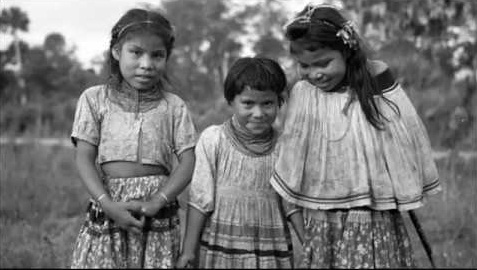
Humans-Homo sapiens-have lived in South America for at least 15,000 years and possibly longer. The earliest period of human occupation is generally called the Lithic Stage by archaeologists. During this time period the first post-glacial hunting and gathering groups lived in South America. The people were living in small groups which subsisted on hunting, fishing, and the gathering of wild plants.
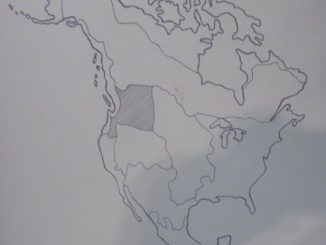
The Crow Reservation in Montana was first defined by the United States government at the Fort Laramie Treaty Council of 1851. Subsequently, the Indian Office (later known as the Bureau of Indian Affairs) assigned Indian agents to administer the reservation. In 1902 Samuel G. Reynolds became the Indian agent for the Crow reservation and began to implement a program of self-sufficiency. He cut off all tribal rations and began to abolish the tribal farms which had been collectively farmed by the Crow. He announced that he would discontinue the practice of meeting with the tribe in a council or powwow. Reynolds' authoritarian policies were carried out in part by Big Medicine, a tribal police officer.
The location of the Crow Reservation is shown in the map above.
The Spanish entrada (entrance) into the American Southwest began during the sixteenth century with explorers who were driven by greed. The Spanish hunger for gold and other fast wealth was justified in their own minds by their religion: their attempts to harvest souls for their religion justified their brutality toward the native peoples they encountered. They had absolutely no doubts about their own cultural and religious superiority. Not only did they have no respect for the Indian cultures which they encountered and the hospitality which was freely offered them, but they expected the Indians to recognize their superiority and to serve them as porters, concubines, and slaves.
The cultural landscape of American Indians is filled with sacred sites which are described in their oral traditions. There are two basic kinds of sacred sites: (1) those which are sacred because of human acts of consecration, dedication, and ritual practice, and (2) those which are intrinsically holy, places which are endowed with great spiritual power. Very little is known about places which were sacred to the native people of the New England tribes prior to the arrival of the Europeans. What is known comes in part from the fragments of oral tradition which have been recorded, from the early European journals, and from the archaeological record.
In 1817, James Monroe became the fifth President of the United States. He was the last Revolutionary War veteran and founding father to assume the Presidency. From an American Indian viewpoint, his presidential administration is important as it set the stage for Indian policies and for the administration of these policies which would guide the American government for two centuries.
While the idea of "indefinite detention" of people determined to be "enemies" of the United States is currently being debated, for American Indians this is an old issue and one in which they have had a great deal of experience. In 1885, the Chiricahua Apache-men, women, and children-surrendered to the United States Army on the condition that they were to be held as prisoners for two years and then they were to be allowed to return to their own land. Instead, they spent the next 27 years as prisoners of war in prisons in Alabama Florida, and Oklahoma.
English really isn't a Native American language, but virtually all of today's Indians speak this as their first and primary language. During the past several centuries the English-speaking Europeans and their descendents who have come to occupy what is now the United States and Canada have consistently shown intolerance for other languages. Consequently, native languages have been suppressed. Native Americans have been required to learn English, and have not been allowed to use their native languages.
Most Navajo ceremonies are focused on health: on healing someone who is ill or on maintaining health. Navajo ceremonies, often referred to as "sings" or "chants," are often a reenactment of the creation of the world through myth, song, prayer, and drama. The patient is placed in this recreated world which closely identifies the patient with the powers of the Holy People.
Following World War II, the United States decided that it wanted to sever its relationships with American Indian tribes. In order to do this, it needed to settle all possible legal claims which might arise out of its past dealings with the tribes. Thus, in 1946, Congress created the Indian Claims Commission to adjudicate all claims arising out of fraud, treaty violations, or other wrongs done to the Indians by the government. Under the Indian Claims Commission Act, a tribe could receive full and just compensation for wrongs. It was presumed that most of these claims would deal with land: lands which had been illegally seized from Indian tribes, land which had been purchased from them at less than their true market value, and damages to Indian land by non-Indian intruders.
Although the direction of the administration was made clear in October, Interior Secretary Ken Salazar will on Monday finalize a 20-year ban on new uranium-mining on some one million acres of land near the Grand Canyon. The announcement will be made at the National Geographic Society HQ in Washington, D.C.
The ban, which is actually an extension of an existing ban, has been under consideration since 2009. Under the Bush administration, thousands of new mining claims had been encouraged under the 1872 Mining Act.
After Salazar's position became clear when he chose "Alternative B" from the Bureau of Land Management's final environmental impact statement on withdrawing lands, Republican lawmakers, including Sen. Orrin Hatch and Rep. Rob Bishop of Utah, as well as Sen. John McCain and Rep. Jeff Flake of Arizona, announced their intention to introduced legislation that would allow new uranium mining.
Alternative B bars 1,006,545 acres of federal lands from new mining. It allows previously approved operations to continue and some new operations on mining claims with valid existing rights. The federal lands are located on two parcels north of the Grand Canyon National Park and one parcel south of the Grand Canyon in the Kaibab National Forest.
The move no doubt would be approved by a Republican President unlike any we have seen since, Teddy Roosevelt, who said in a speech at the Grand Canyon more than a century ago:
Leave it as it is. You cannot improve on it. The ages have been at work on it, and man can only mar it. What you can do is to keep it for your children, your children's children, and for all who come after you, as one of the great sights which every American if he can travel at all should see.
We have gotten past the stage, my fellow-citizens, when we are to be pardoned if we treat any part of our country as something to be skinned for two or three years for the use of the present generation, whether it is the forest, the water, the scenery. Whatever it is, handle it so that your children's children will get the benefit of it."
Some people just can't stand to see any land unmolested by development or mining. Thankfully, these million acres are getting another 20-year reprieve. But count on the "improvers" to be back licking their chops about 18 years from now.
With the impending canonization of Kateri Tekakwitha - the 17-century Mohawk woman who tended to the sick and elderly will be celebrated as a saint in the Catholic Church.
But where does she hail from? Follow the dispute after the jump ....
In honor of my mother, THE FLORA SOMBRERO LIND NAVAJO ENDOWMENT FUND has been set up to accept your donations.
This scholarship endowment has been established at the American Indian College Fund to honor Flora Sombrero Lind, as an enrolled member of the Navajo Nation who was born at Inscription House, Arizona of the Many Goats clan circa 1925. This scholarship endowment is funded by Flora's family and friends who want to see Navajo students pursue higher education and carry on their great Navajo heritage.
Please leave a comment here if you donate.
Site Donations
- Please specify what your donation is for in the notes section of the PayPal window. Either propane for Pine Ridge or Rosebud or Hosting fees for this blog. --navajo
If you like to help Aji and Wings please mail a check to them at the address here:
wingssilverwork.com
Click the contact tab for address.
About
Native American Netroots
...a forum for the discussion of political, social and economic issues affecting the indigenous peoples of the United States, including their lack of political representation, economic deprivation, health care issues, and the on-going struggle for preservation of identity and cultural history
The Native American Rights Fund (NARF) is a non-profit 501c(3) organization that provides legal representation and technical assistance to Indian tribes, organizations and individuals nationwide - a constituency that often lacks access to the justice system. NARF focuses on applying existing laws and treaties to guarantee that national and state governments live up to their legal obligations.
DONATE ONLINE
Indigenous Peoples and Human Rights News by Brenda Norrell